
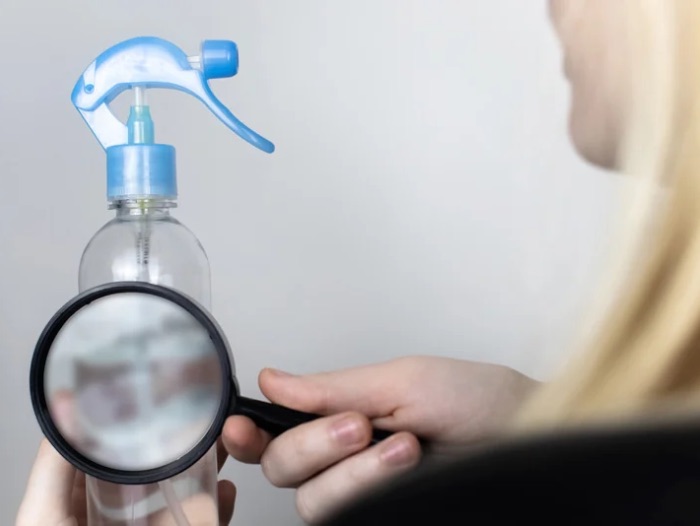
Phthalates are among those substances that you can’t see or smell, yet they’re found almost everywhere. As a father, I want to know what’s in the things my children come into contact with every day. So here’s an overview: what phthalates are, where they’re found, what effects they can have, and what we can do as a family.
What are phthalates?
Phthalates are chemical compounds added to plastics as plasticizers, particularly to soft PVC. They make the material elastic and flexible. Because they are not firmly bound to the plastic, they can leach out over time and migrate into the air, dust, or food.
Where are phthalates found?
According to the Federal Ministry for the Environment, they are found in many products we use every day:
- Home: flooring, wallpaper, varnishes and paints, synthetic leather
- Packaging: plastic-coated packaging materials
- Toys: especially older or imported products
- Cosmetics and medical devices: in some cases, such as in capsules or IV tubing
- House dust: phthalates from indoor air accumulate here
The Federal Environment Agency has shown that the plasticizer DEHP is primarily ingested through food. In children, about half comes from food, and the rest from house dust, consumer products, and toys.
How do phthalates affect health?
Phthalates are considered endocrine disruptors: they can act similarly to hormones in the body. DEHP, DBP, DIBP, and BBP are particularly concerning. The EU has classified them as substances that may impair reproductive function, so there is sufficient evidence to suggest that they can affect fertility.
There is additional evidence: In the European HBM4EU project, exposure to certain phthalates was linked in studies to obesity, insulin resistance, asthma, and ADHD. These are correlations observed in studies, not proof of causation in individual cases. Some phthalates also affect the liver. Young children and pregnant women are considered particularly vulnerable.
What are the rules?
- Toys and baby products: DEHP, DBP, and BBP have been banned in the EU since 2005. DINP, DIDP, and DNOP are banned in toys that children might put in their mouths.
- Cosmetics: According to the EU Cosmetics Regulation, the phthalates DEHP, DBP, and BBP are not permitted.
- Food packaging: DEHP is banned in packaging for foods containing fat.
- The problem: The BfR states that banned phthalates are occasionally detected in imported products. Older toys sold before the bans went into effect may also still contain them.
Is this still a problem?
I think so. Here are a few points that illustrate this:
They are still detectable everywhere. In a study of children representative of the German population, certain phthalates were found in all samples tested.
Exposure levels have decreased, but they haven’t disappeared. The BfR reports that in the study conducted from 2003 to 2006, 1.5 percent of children had levels so high that adverse health effects could no longer be ruled out with sufficient certainty. In the follow-up study from 2014 to 2017, DEHP levels in urine were four times lower. In a few cases, however, levels continued to exceed the guideline values – for example, for DBP in about 1.2 percent of children.
Exceedances are also occurring across Europe. In the HBM4EU studies, individual children and adolescents exceeded the levels at which health effects cannot be ruled out for certain phthalates.
What We Can Do as a Family
- Avoid PVC whenever possible. On recycling labels, PVC is identified by the number 3.
- Do not store fatty foods in soft plastic; use glass or stainless steel instead.
- Wipe down surfaces regularly with a damp cloth, and clean floors and carpets regularly. The BfR recommends this especially for young children.
- Carefully inspect toys from old stock and those from discount retailers. Young children should only put objects in their mouths that are intended for that purpose.
- Ventilate: Fresh air reduces the concentration of substances that leach from plastics.
My Take on This
I don’t think the issue is resolved just because some phthalates have been banned. Exposure has decreased, but it’s still there, and it affects children in particular. That’s why I don’t want to wait until every study provides a definitive conclusion. If I can prevent my children from being exposed to unnecessary plasticizers with minimal effort, I’ll do it. I’m concerned about my family’s health and the world we’ll leave behind for them.
You can find more on this in the posts “Toxins in Products” and “Environmental Protection as Parents.”
Yours, Thomas
About Me
Hi, I'm Tom, a father and independent RINGANA partner. On my blog, I share my experiences with health, making informed product choices, and sustainability. It's especially important to me that our children grow up healthy and that we leave them a future worth living.

Note: This blog post contains affiliate links. If you purchase a product through these links, we receive a commission, which helps us run this blog. There are no additional costs to you.