
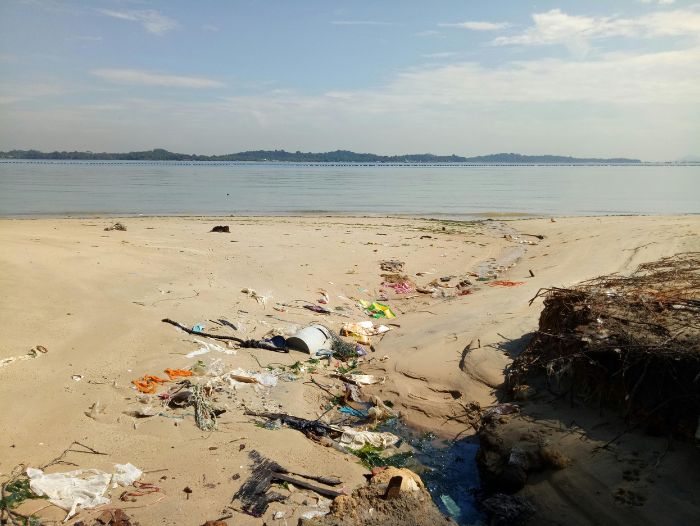
Microplastics are one of the issues that, as a father, I no longer want to ignore. They’re invisible, they’re everywhere, and they don’t just disappear. Here’s my overview: where they’re found, what the research says today, and what we can actually do as a family.
What exactly are microplastics?
Microplastics are defined as solid plastic particles smaller than five millimeters. They are created in two ways: either they are intentionally added—for example, as exfoliating beads in cosmetics—or they are created unintentionally when larger pieces of plastic break down or wear away.
Where are microplastics found?
- Tire wear: Every kilometer driven on the road leaves behind particles that are washed into the soil and waterways by rain.
- Synthetic clothing: Tiny fibers, such as those from fleece or athletic wear, come loose during washing.
- Packaging and plastic waste: Larger pieces break down over time into smaller and smaller pieces.
- Cosmetics and personal care products: Previously mainly as exfoliating beads, today still found in some other products (more on that in a moment).
- Household and everyday life: For example, in cleaning products, paints, or as granules on artificial turf fields.
The Federal Institute for Risk Assessment (BfR) states that microplastics can now be found almost everywhere: in the air we breathe, in food, and even in human organs.
What is the EU’s stance on microplastics in cosmetics?
As of October 17, 2023, microbeads—such as those found in exfoliants—are banned in the EU, as is loose glitter. Transition periods apply to other products: rinse-off cosmetics must be phased out by October 2027, while products that remain on the skin and hair—such as creams, lotions, and sunscreen—must be phased out by October 2029. For makeup, lip, and nail products, the deadline is as late as October 2035. The ban applies only to intentionally added microplastics, not to abrasion from tires or textiles.
How do microplastics affect us?
I want to be honest here, because this topic can quickly become emotional. Based on current information, the BfR considers the health risk to be relatively low and has found no conclusive evidence of harm to humans so far. At the same time, the institute itself acknowledges that further research is needed, particularly regarding the exact mechanisms of action and the consequences of long-term exposure. Individual studies have detected microplastics in the brain, lungs, and reproductive organs, among other places. Experts are debating how conclusive these studies are.
One thing is indisputable: plastic hardly breaks down in nature. It accumulates in soil, water, and the food chain. This is an environmental problem, regardless of how the health question is ultimately answered.
My Stance: Prevention Rather Than Waiting and Seeing
To me, “not yet fully researched” doesn’t mean “no reason to act.” When it comes to our children, I don’t want to wait for someone to provide definitive proof in ten years. If I can prevent unnecessary plastic particles from entering our daily lives, our personal care routines, and the environment with minimal effort, then I’ll do it. To me, precaution isn’t alarmism—it’s just a normal part of being responsible.
What you can do as a family
- Read the ingredients: With cosmetics, it’s worth checking the list—terms like polyethylene, nylon-12, or acrylates copolymer may indicate the presence of plastics.
- With the ToxFox app, for example, you can identify toxic ingredients in your bathroom products.
- Reduce packaging: Reusable instead of disposable, loose instead of shrink-wrapped. Like the banana in plastic.
- Choose natural fibers where possible, and wash synthetic clothing carefully.
- Check manufacturers: How transparent is a company about this issue?
How We See It at Ringana
One reason I partner with the cosmetics company Ringana is that the company consciously avoids microplastics, as well as mineral oils and synthetic preservatives. In addition, some products come in reusable glass bottles instead of disposable packaging. For me, this aligns with what I want to pass on to my family. You can find more on this in the post “The Ringana Concept,” on toxins in general in “Toxins in Products,” and on the question of what we’re leaving behind for our children in “Environmental Protection as Parents.”
Yours, Thomas
About Me
Hi, I'm Tom, a father and independent RINGANA partner. On my blog, I share my experiences with health, making informed product choices, and sustainability. It's especially important to me that our children grow up healthy and that we leave them a future worth living.

Note: This blog post contains affiliate links. If you purchase a product through these links, we receive a commission, which helps us run this blog. There are no additional costs to you.